Back Rubik's Cube
Top Rubic
Patience, planning and visual memory
Ages 6–14
2,000+ certified trainers · a certificate for every level

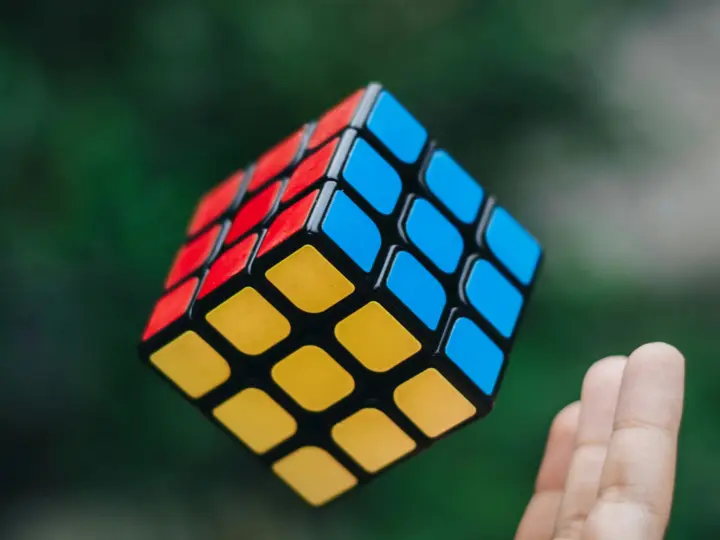

Video lessons
Learn step by step, one video at a time
Watch the lessons in order and solve along with the trainer on your own cube.
-
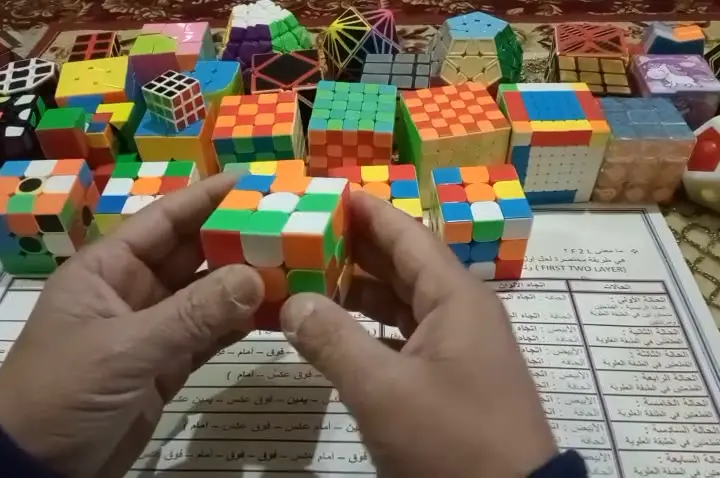 Lesson 1
Rubik's cube: lesson 1
-
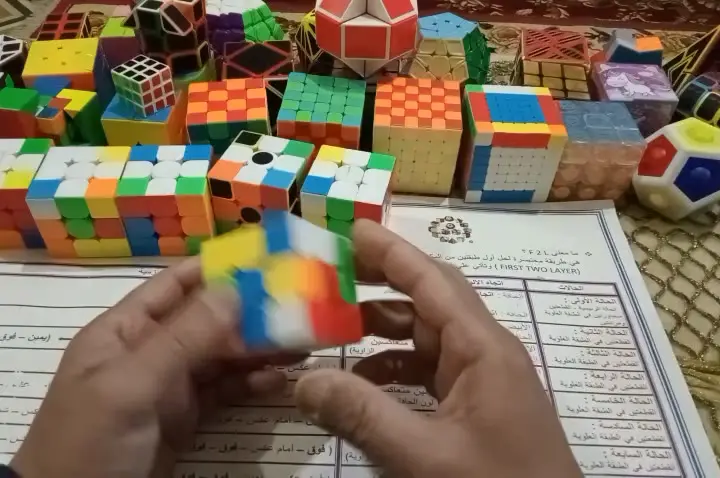 Lesson 2
Rubik's cube: lesson 2
-
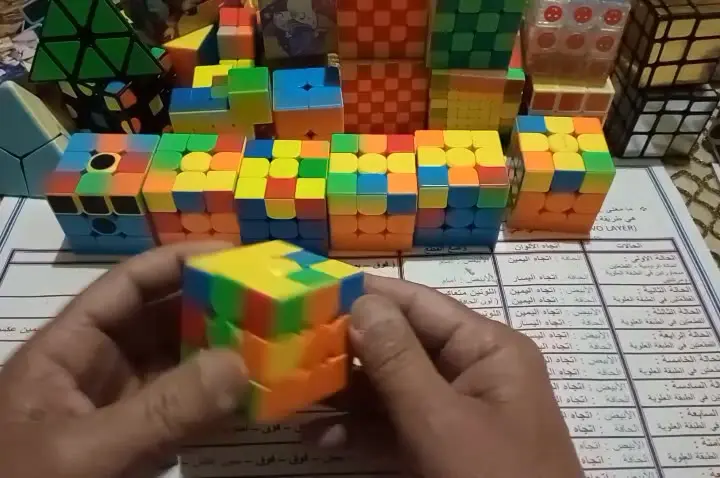 Lesson 3
Rubik's cube: lesson 3
-
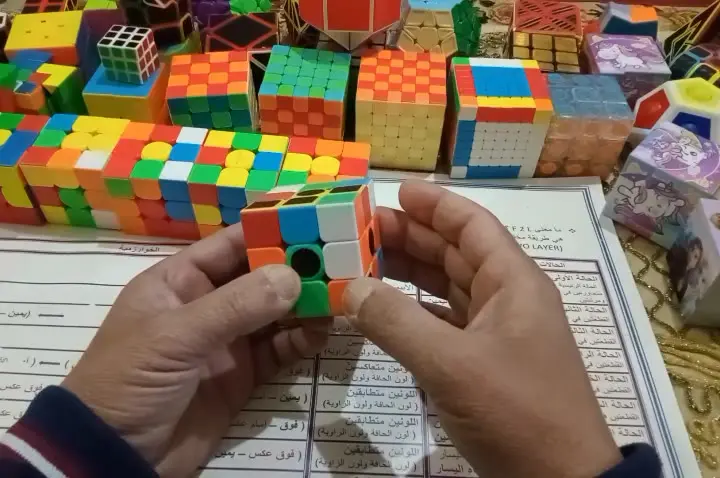 Lesson 4
Rubik's cube: lesson 4
-
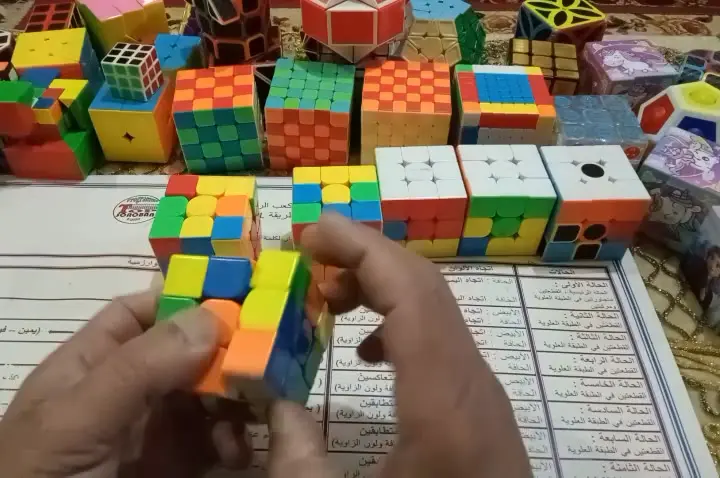 Lesson 5
Rubik's cube: lesson 5
Practice
Practise what you learned
Free interactive trainings on this device, no sign-up.
Move notation
Read the moves like a pro
In the Top Soroban notation, "i" means inverse (the same as ' in international notation: Ri = R').
Beginner method · 3×3
Solve the cube in 8 steps
Each step shows the algorithm in symbols and in words. Repeat it until the step is done.
Step 1 · White cross (+)
No algorithm: solved by looking
Step 2 · White corners
- RiRight inverse
- DiDown inverse
- RRight
- DDown
Step 3 · Middle layer: right edge
- UUp
- RRight
- UiUp inverse
- RiRight inverse
- UiUp inverse
- FiFront inverse
- UUp
- FFront
Step 4 · Middle layer: left edge
- UiUp inverse
- LiLeft inverse
- UUp
- LLeft
- UUp
- FFront
- UiUp inverse
- FiFront inverse
Step 5 · Yellow cross (+)
- FFront
- RRight
- UUp
- RiRight inverse
- UiUp inverse
- FiFront inverse
Step 6 · Match the cross with the centres
- RRight
- UUp
- RiRight inverse
- UUp
- RRight
- UUp
- UUp
- RiRight inverse
- UUp
Step 7 · Yellow corners
- UUp
- RRight
- UiUp inverse
- LiLeft inverse
- UUp
- RiRight inverse
- UiUp inverse
- LLeft
Step 8 · Final step: turn the yellow corners
- RiRight inverse
- DiDown inverse
- RRight
- DDown
Methods
Beginners, advanced and professionals
| Item | Beginners | Advanced | Professionals |
|---|---|---|---|
| Learned | First | Second | Third |
| Training time | Short | Medium | Long |
| Solve time | 30–40 s | 15–20 s | 5–10 s |
| Steps | 7 steps | 7 steps | 4 steps |
| Algorithms | 7 algorithms | 15 algorithms | 129 algorithms |
| Stages |
|
|
|
Puzzle types
From 2×2 to Megaminx
- Cube 2×2×2
- Cube 3×3×3
- Curved cube 3×3×3
- Cube 4×4×4
- Cube 5×5×5
- Cube 6×6×6
- Cube 7×7×7
- Cube 8×8×8
- Cube 9×9×9
- Cube 10×10×10
- Pyramid 3×3×3
- Pyramid 4×4×4
- Mirror cube 2×2×2
- Mirror cube 3×3×3
- Megaminx 2×2×2
- Megaminx 3×3×3
- Megaminx 4×4×4
- Megaminx 5×5×5
Benefits
What the Rubik's cube builds
- Stronger spatial thinking
- Better thinking
- More imagination and 3D visualisation
- Support for maths, physics, technology and more
- A stronger memory
- Map-reading skills, like those architects and designers use
- Sharper visual attention to detail
- Uses logical thinking and imagination together
- Keeps the mind active
- Creativity and organised thinking at the same time
- Faster, more precise movement
- Longer focus
- Quicker intuitive thinking and perception
- Builds thinking and reasoning skills
- Nimble hands and fingers
- Better hand–eye coordination
- More self-confidence
- A fun mental activity that helps keep the mind active at any age
- A calm activity that helps with relaxing and focusing
- Solving the cube in 20 moves or fewer with simple, proven algorithms
Prepared by Mr Amin El-Hashemy, board member · Supervised by Dr Hany Abdo, Chairman
From class
See a class from inside


Ready to start with the abacus?
A free 30-minute assessment, then we suggest the level and the nearest trainer.
More programs